AT A GLANCE
The product in context.
This Anker 20,000mAh power bank combines an integrated USB-C cable with extra outputs for a mixed travel kit. It is intended to support compatible USB-C laptops as well as phones, while keeping one charging lead attached to the battery.
This is a researched editorial overview based on the linked manufacturer information. This product is not in the owner’s collection and has not been tested by GadgetsBag. Pros, cons and the assessment are provisional, not firsthand findings.
A CLOSER LOOK
Photo gallery.
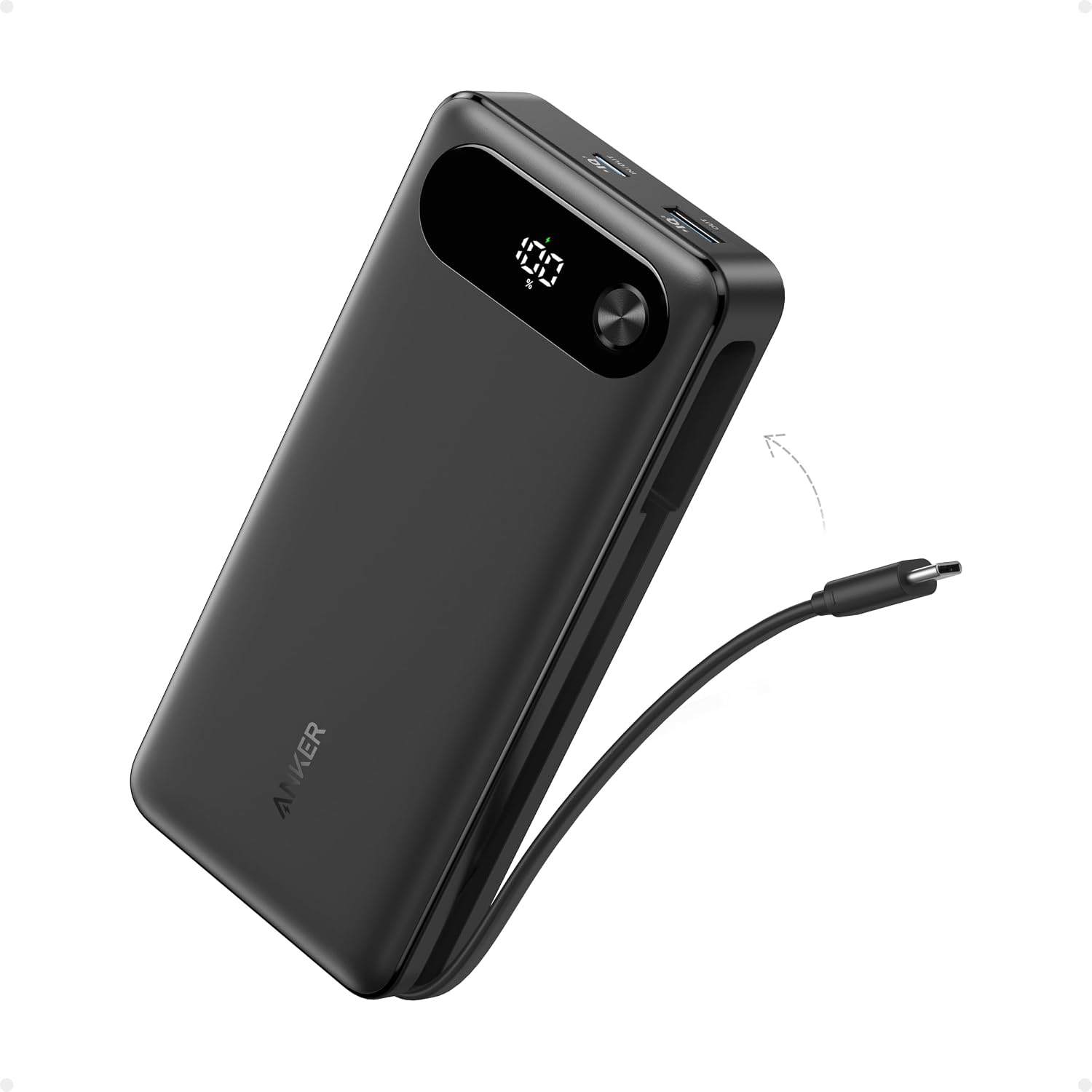
Image 1 of 4
Choose a thumbnail, then tap the large photo to enlarge it. Use the viewer arrows or swipe to explore. Product imagery is credited to its source.
THE PUBLISHED DETAILS
Product specifications.
- Capacity
- 20,000mAh nominal cell capacity
- Combined output claim
- Up to 87W shared across three devices
- Single-device output claim
- Up to 65W
- Connections
- Built-in USB-C cable, additional USB-C port and USB-A port
- Recharge claim
- Around 1.5 hours with a suitable 65W charger
- Colour
- Classic Black
- Charger
- Wall charger required separately
Source: Product specifications and feature notes ↗. Manufacturer or listing claims are not our measurements. Check the exact regional variant.
THE PRACTICAL PERSPECTIVE
Overall review.
87W is shared, not one laptop’s input
The listing explicitly distinguishes up to 87W across three devices from up to 65W for one device. A laptop must accept the offered USB Power Delivery profiles. Some machines need more power under load, so compare their charging requirements before expecting normal adapter performance from the bank.
An integrated cable is convenient, but still a wear point
The attached USB-C lead reduces the chance of leaving a cable behind. Its bend-life statement is a manufacturer test claim, not a GadgetsBag durability result. Avoid tight bends and strain at the plug. The extra USB-C port offers flexibility when a separate suitable cable is more convenient.
Capacity and recharge time need context
20,000mAh describes nominal internal-cell capacity, not energy delivered unchanged to the phone. Conversion losses and device use reduce the number of top-ups. The advertised recharge time needs an appropriate charger and conditions; a small phone adapter will not reproduce the 65W recharge setup.
Sources and related reading
WEIGH THE TRADE-OFFS
Pros & cons.
Based on published features and editorial assessment; not test results.
Pros
- Built-in USB-C cable simplifies everyday packing
- Up to 65W single-device claim for compatible USB-C laptops
- Additional outputs serve a mixed charging kit
Cons
- 87W headline is combined shared output
- Fast recharge requires a suitable separate charger
- Integrated cable wear and real delivered capacity are untested here
Who is it for?
Worth considering for
- Travellers carrying a compatible USB-C laptop and phone
Think about first
- Laptop power requirements and profiles
- Port-sharing limits
- Bag weight and charger choice
THE TAKEAWAY
Our assessment.
A useful all-in-one charging shortlist when 65W single-device output is sufficient. Check the power table and charger setup rather than reading 87W as universal laptop power.
Provisional assessment · Hands-on testing pendingWhat we still need to test.
These checks will help turn the initial assessment into a hands-on review.
- Output with the actual laptop under load
- Recharge time and cable handling
Read our editorial policy.